
Do I Even Need Gutters?
- davidhornstein3
- May 13
- 2 min read
Homeowners ask- Do I need gutters? They can be ugly and expensive, so why bother?
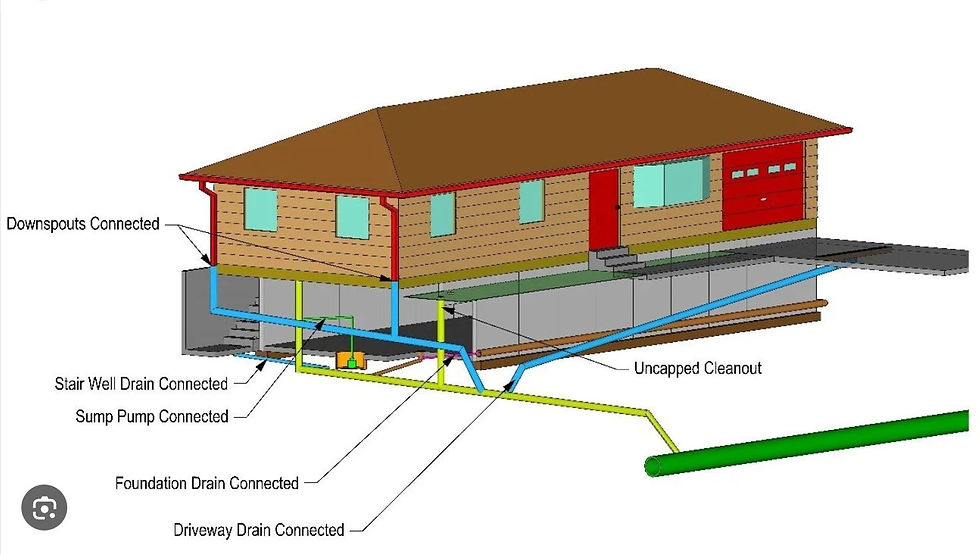
The purpose of gutters is to collect rainwater from the roof and deliver it to a designated location. They are necessary in situations where allowing rain to fall directly from the roof to the ground will cause problems.
The Primary Concern: Water at the Foundation
The main concern with water collecting around the base of a building is infiltration, which can lead to rot, mold, and flooding. Whether these problems actually occur depends on several factors: the topography around the building, soil type and absorption capacity, foundation materials, and whether the foundation has dampproofing or waterproofing.

In new construction, it is theoretically possible to forgo gutters by waterproofing the foundation and installing underground drainage to prevent water accumulation — but only under the right conditions. This approach works when the soil is sandy or gravelly enough to absorb and move water, or when a drainage pipe can flow downhill to an area that won't back up. In poorly draining soil, a continuous footing drain typically won't work because surface water simply won't percolate down to reach it. Even placing well-draining fill around a foundation won't help if the soil beneath it drains poorly — the water will remain trapped.
In cold climates, rain can fall on frozen ground, which prevents it from entering the drainage system. This runoff or thawed snow often migrates directly into the top of the foundation wall above the damproofing.

Other Reasons Gutters Matter
Beyond foundation concerns, uncontrolled runoff can fall in unwanted places — over walkways, onto driveways, or onto a neighbor's property. Because roof runoff can also enter storm sewers, many municipalities now require gutters and on-site water storage to avoid overtaxing drainage systems. In New England, many towns mandate a stormwater runoff plan designed for 100% on-site capture of roof drainage.
Runoff can also damage the building itself. Depending on the depth of the roof overhang, water can be blown against siding or infiltrate around windows and doors. Very deep overhangs can help, but they create a drip line around the house requiring special landscaping.
The Bottom Line
It may be possible to design a home without gutters if all of the above factors are carefully considered. However, given Duragutter’s wide range of attractive, durable gutter options,there's rarely a good reason to do so.


Comments